Home energy upgrade
Solar
Rooftop solar PV and battery storage by licensed installers — the 30% federal Residential Clean Energy Credit plus net metering.
Step by step
How Solar installation works
-
A solar installer assesses your roof, shading, and usage.
-
You receive a written proposal with production and savings estimates.
-
They handle permits and the utility interconnection application.
-
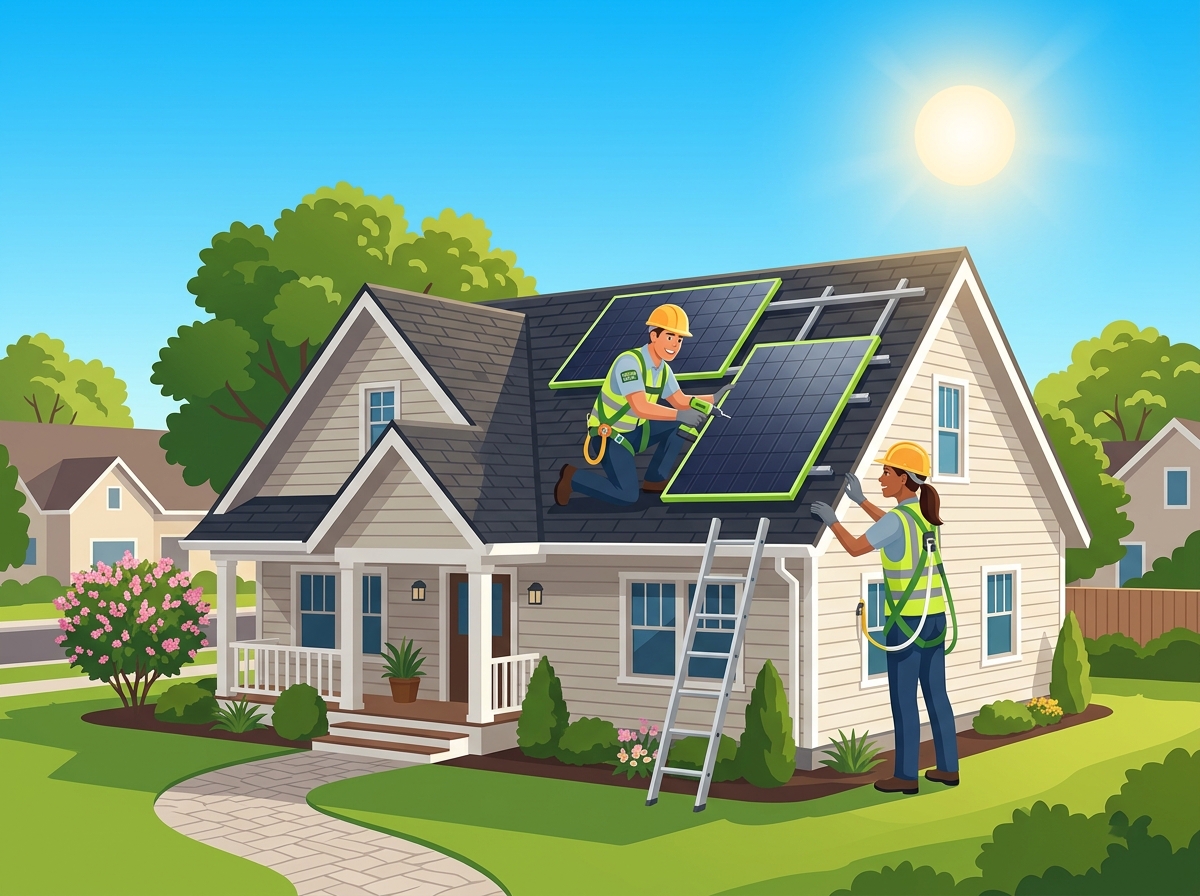
Panels (and any battery) are installed, usually in one to two days.
-
After utility approval (PTO) the system switches on; you claim the 30% credit.
Why it's worth it
Benefits of Solar
- Generate your own electricity and cut your utility bills
- 30% federal Residential Clean Energy Credit (25D)
- Net-metering credits for power you export (varies by state/utility)
- Add battery storage for backup power
- Licensed installers; utility interconnection handled for you
What to budget
Typical cost
Costs vary significantly depending on property size, existing systems, and contractor. A surveyor's assessment will give you an accurate figure. Available tax credits and rebates (listed below) can substantially reduce the net cost.
Is this right for you?
Ideal for
- Homes with good roof orientation and sun exposure
- High electricity bills
- Owners wanting energy independence or backup power
- Households claiming the 30% federal solar credit
Financial support
Grants you may qualify for
Residential Clean Energy Credit
25D CreditA federal income-tax credit equal to 30% of the cost of solar panels, battery storage, solar water heating, and geothermal systems — with no annual dollar cap.
Net Metering & Net Billing
Net MeteringState and utility programs that credit your electric bill for the solar energy you export to the grid — the exact value varies from full retail rates to lower net-billing rates depending on your state and utility.
State & Local Utility Rebates
Utility RebatesThousands of state, local, and utility-run rebate programs across the country reward efficiency, HVAC, weatherization, and solar upgrades — searchable by ZIP code through the DSIRE database.
Ready to go?
Find licensed Solar contractors near you
Compare licensed specialists in your area, check their credentials, and book a free assessment worth $250.